
How to prepare the meal environment for an older adult with dysphagia
Learn how to prepare the meal environment for an older adult with dysphagia, with fewer distractions, better support, suitable utensils, and signs to pause.
Read articleCaregivers notice important daily signs: choking, fatigue, food refusal, posture, oral hygiene, and routine changes. This page gathers practical resources for safer care.
How meals are offered, pauses are observed, pace is respected, and changes are recorded can protect comfort and safety.
Learn how to prepare the meal environment for an older adult with dysphagia, with fewer distractions, better support, suitable utensils, and signs to pause.
Read article
Published on July 18, 2026
Learn what to organize at home after discharge when an older adult has dysphagia, including meals, fluids, medication, and warning signs.

Published on July 9, 2026
Learn why drinking water while lying down may increase choking risk in older adults and how to offer fluids more safely.

Published on July 7, 2026
Learn why an older adult may choke on saliva, which signs deserve attention, and how caregivers can respond safely.

Published on June 25, 2026
Use this daily checklist to observe dysphagia signs, meals, hydration, medication issues, and when to seek help.

Published on June 18, 2026
Learn why an older adult may hold food in the mouth, how to respond safely, and which signs require professional assessment.
Published on June 17, 2026
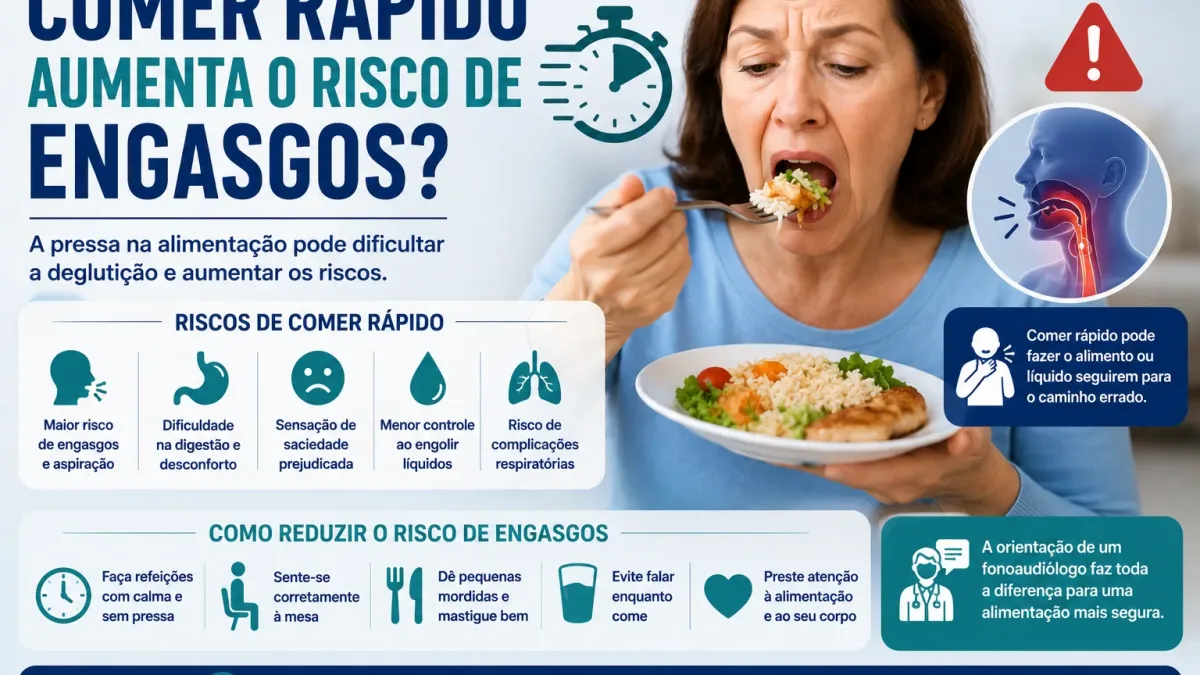
Learn why eating too fast may increase choking risk, which signs to observe, and how to organize calmer meals without improvising care.

Published on June 17, 2026
See how posture, pace, alertness, and warning signs matter when offering food to a bedridden older adult.
Schedules, environment, pauses, and supervision may reduce rushing and confusion.
Frequent cough, wet voice, fever, weight loss, and fatigue should be recorded.
Good sitting posture, suitable portions, and respecting pace matter.
Bedridden, sleepy, or dependent older adults need extra attention during meals.
Holding food in the mouth, fatigue, or choking on saliva may suggest risk.
A clean mouth is part of preventing discomfort and complications.
Routine, discharge, environment, posture, supervision, and support for older adults with dysphagia.
How to offer, supervise, and adapt mealtime with safety and respect.
Choking, fatigue, food held in the mouth, saliva, oral hygiene, and caregiver records.
Supervision should combine safety and respect. Giving time, observing signs, avoiding excessive insistence, and recording questions can make meals calmer.
Care becomes clearer when signs, foods, and questions are recorded and shared with the healthcare team.